Brita, PUR, or ZeroWater — Which Pitcher Should You Buy?
If you're looking for a simple, affordable way to improve your tap water, a pitcher filter is the most accessible option. But with three dominant brands — Brita, PUR, and ZeroWater — each offering different filtration levels, different costs, and different certifications, choosing the right one isn't as straightforward as it seems.
This guide compares the three head-to-head across every metric that matters: filtration performance, NSF certifications, cost per gallon, filter life, taste, and real-world usability.
By the end, you'll know exactly which pitcher is right for your water quality, your budget, and your health priorities.
🏆 Quick Verdict
| Pick | Brand | Best For | Price | Action |
|---|---|---|---|---|
| BEST OVERALL | PUR Ultimate | Broadest contaminant coverage — NSF 42, 53, 401 certified | ~$60 | Check Price → |
| BEST BUDGET | Brita Elite | Lowest upfront cost, great taste, widely available | ~$30 | Check Price → |
| BEST TDS | ZeroWater 10-Cup | Removes dissolved solids, ideal for hard water | ~$60 | Check Price → |
Head-to-Head Comparison Table
| Metric | Brita Elite | PUR Ultimate | ZeroWater 10-Cup |
|---|---|---|---|
| Upfront Price | ~$30 | ~$60 | ~$60 |
| Filter Cost | $8–10 each | $10–13 each | $15–18 each |
| Filter Life | 40 gal (~2 mo) | 40 gal (~2 mo) | 20–40 gal (varies) |
| Cost Per Gallon | ~$0.18 | ~$0.23 | ~$0.35 |
| NSF 42 (Taste) | ✅ | ✅ | ✅ |
| NSF 53 (Health) | ✅ (Elite) | ✅ | ✅ |
| NSF 401 (Emerging) | ❌ | ✅ | ❌ |
| PFAS Reduction | ❌ | ❌ | Partial |
| TDS Removal | ❌ | ❌ | ✅ (>95%) |
| Lead Reduction | ✅ | ✅ (99%) | ✅ |
| Capacity | 10 cups | 11 cups | 10 cups |
| Filtration Speed | ~5 min/pitcher | ~5 min/pitcher | ~8 min/pitcher |
| Includes TDS Meter | ❌ | ❌ | ✅ |
1. Brita Elite — The Household Name
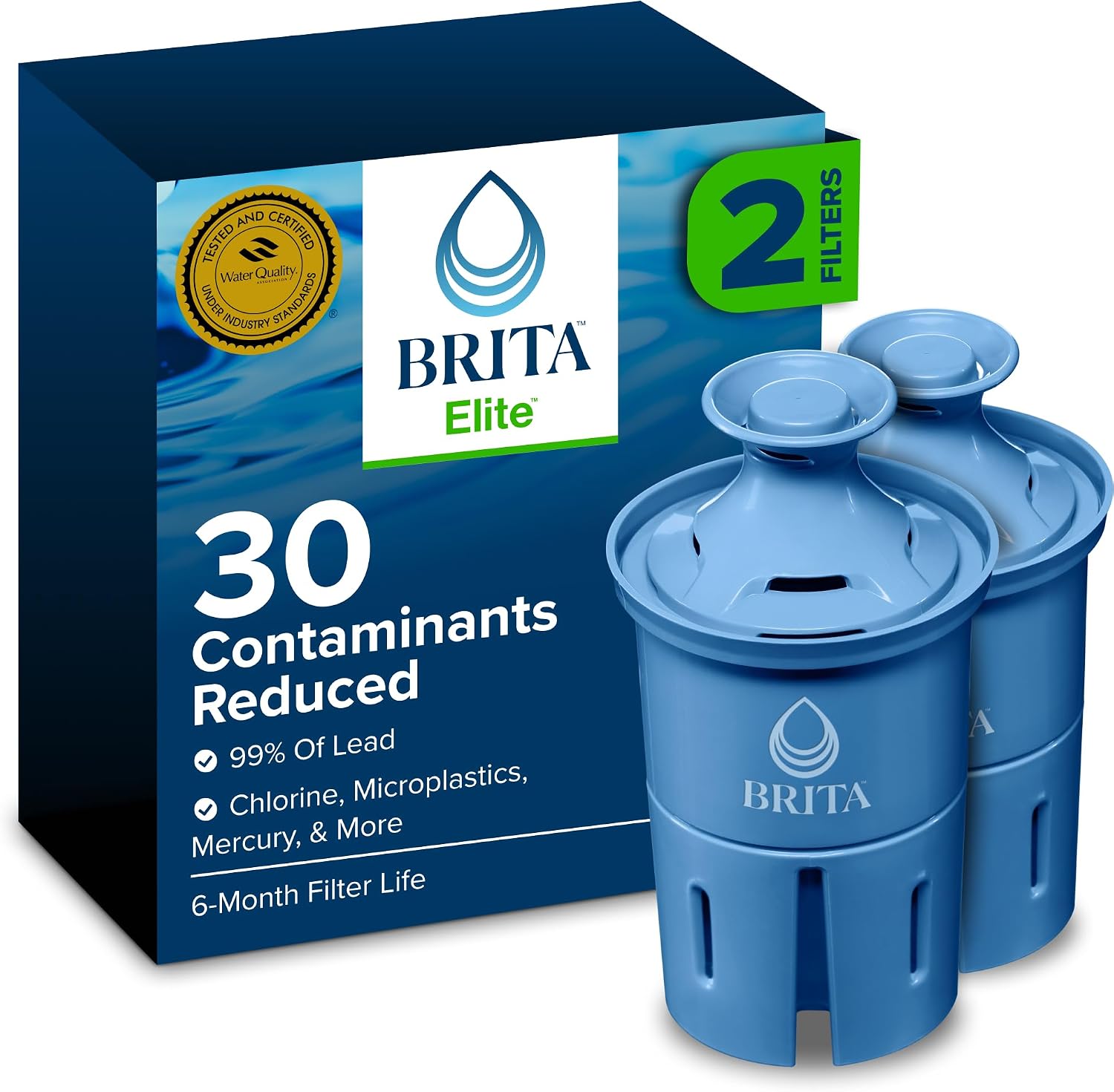
Price: ~$30 (pitcher) | $8–10 per filter
Certifications: NSF 42, NSF 53 (Elite filters only)
Brita is the most recognized name in water filtration — and for good reason. The Elite line is a significant upgrade over standard Brita filters, adding NSF 53 certification for lead, mercury, and benzene reduction. The pitcher is widely available (every grocery store, Target, Walmart, and Amazon), replacement filters are cheap, and the design is dead simple.
What Brita Does Well
- Accessibility: You can find Brita filters at virtually any store. No special ordering needed.
- Lowest cost: At $0.18/gallon, it's the cheapest per-gallon option among the three.
- Great taste improvement: The carbon filter is excellent at removing chlorine taste and odor.
- Simple design: No indicator lights, no TDS meters — just fill and wait.
Where Brita Falls Short
- No NSF 401: Unlike PUR, Brita Elite doesn't carry certification for emerging contaminants like pharmaceuticals or PFOA/PFOS.
- No PFAS reduction: Brita does not claim to reduce PFAS compounds.
- No TDS removal: Brita leaves dissolved minerals in the water — which is fine for taste, but doesn't help if you have hard water.
- Plastic construction: BPA-free, but still plastic.
Bottom line: Brita is the right choice if your main concern is taste and your water is already reasonably clean. It's the cheapest option and the most convenient to buy filters for.
2. PUR Ultimate — The Contaminant Champion
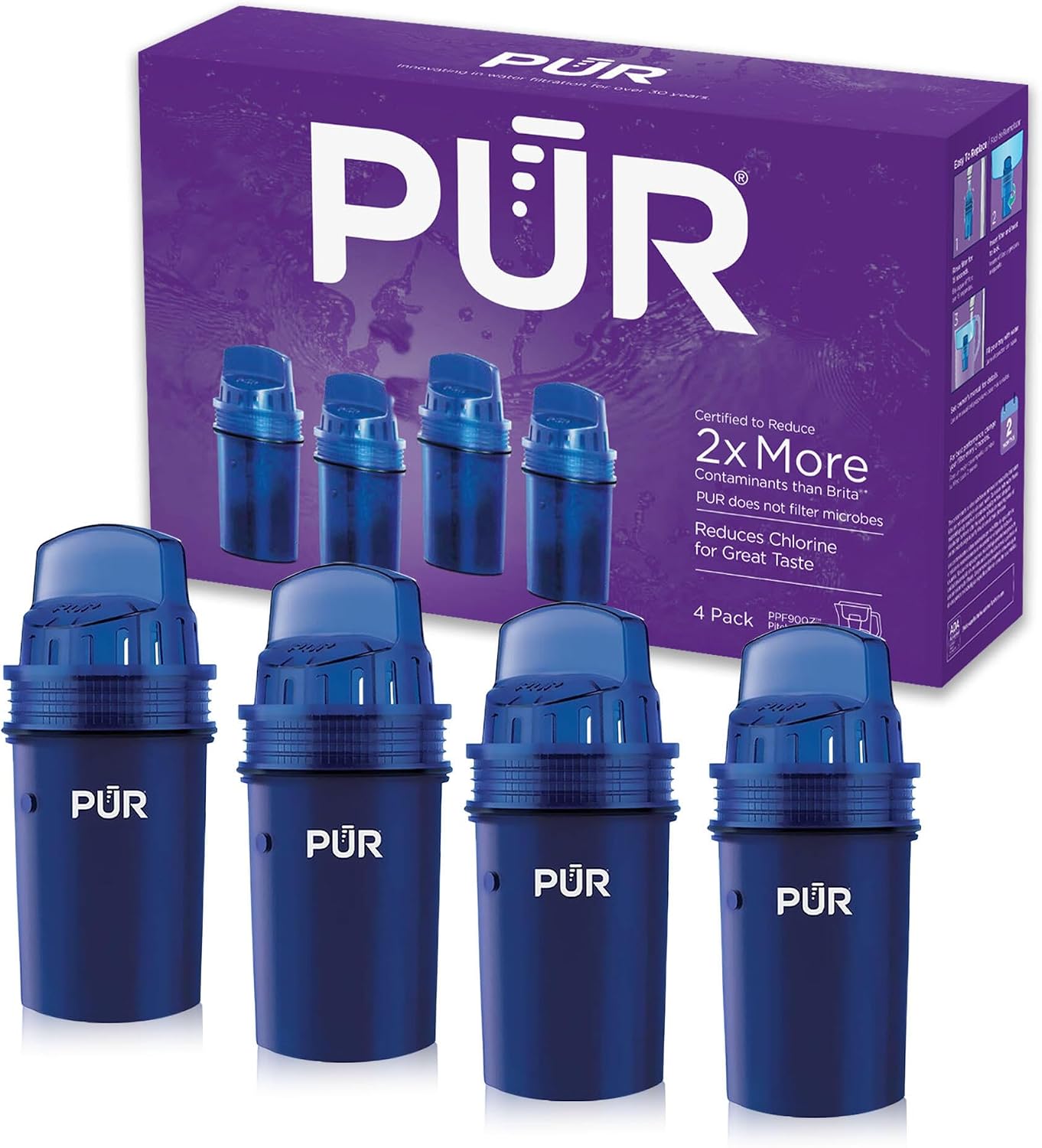
Price: ~$60 (pitcher) | $10–13 per filter
Certifications: NSF 42, NSF 53, NSF 401
PUR's Ultimate pitcher is the most certified pitcher filter on the market. It's the only pitcher in this comparison with NSF 401 certification for emerging contaminants — including pharmaceuticals, PFOA, and PFOS. If you're worried about more than just taste and lead, PUR is the step up from Brita that makes sense.
What PUR Does Well
- NSF 401 certified: This is the big differentiator. PUR Ultimate is certified for emerging contaminants that Brita doesn't address.
- 99% lead reduction: Highest lead reduction rate among the three.
- Largest capacity: 11 cups — one more than Brita or ZeroWater.
- Mechanical filter indicator: Shows when it's time to change the filter (no guessing).
- Broad contaminant coverage: Lead, mercury, pesticides, pharmaceuticals, and more.
Where PUR Falls Short
- No PFAS-specific certification: While NSF 401 covers PFOA/PFOS, PUR doesn't carry the stricter NSF P473 certification for PFAS.
- No TDS removal: Same as Brita — dissolved minerals stay in the water.
- Higher per-gallon cost: $0.23 vs. Brita's $0.18.
- Plastic construction: BPA-free but still plastic.
Bottom line: PUR Ultimate is our top pick for most households. It's the best balance of cost, contaminant coverage, and accessibility. The NSF 401 certification gives it a meaningful edge over Brita for just $5 more upfront.
3. ZeroWater 10-Cup — The TDS Eliminator
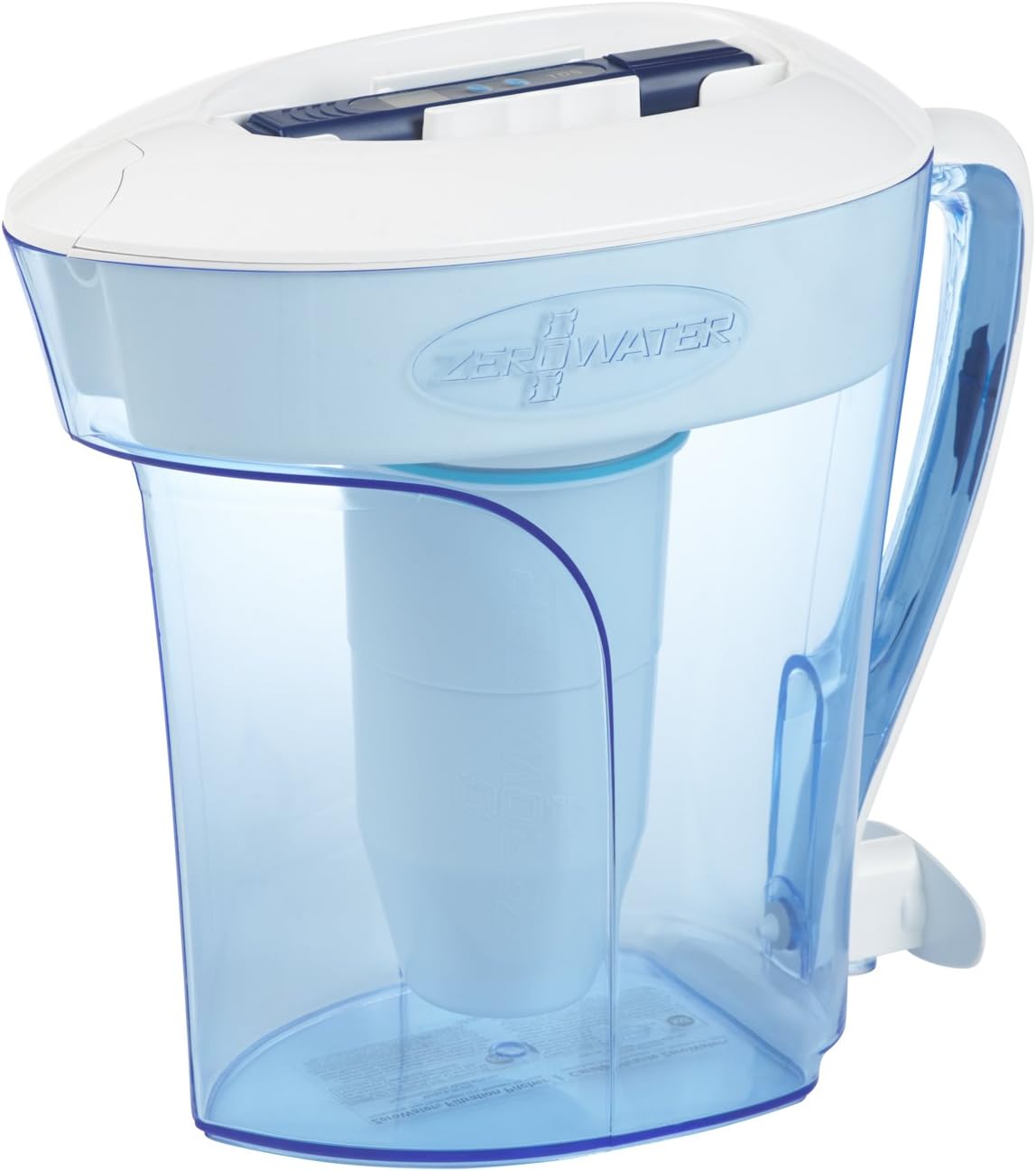
Price: ~$60 (pitcher) | $15–18 per filter
Certifications: NSF 42, NSF 53
ZeroWater is fundamentally different from Brita and PUR. Instead of just carbon filtration, it uses a 5-stage ion-exchange + carbon system that removes all dissolved solids — not just contaminants. The result is water with a TDS reading of 0–10 ppm, essentially indistinguishable from distilled or RO water.
What ZeroWater Does Well
- Total dissolved solids removal: ZeroWater is the only pitcher that removes TDS, making it ideal for hard water areas.
- Includes a TDS meter: You can actually test your water before and after — transparent, verifiable results.
- Better for hard water: If your tap water leaves white residue on glassware, ZeroWater solves it completely.
- Purified water taste: The water tastes like bottled purified water — clean, crisp, zero mineral aftertaste.
- Partial PFAS reduction: ZeroWater is the only pitcher with meaningful PFAS reduction, though it's not NSF P473 certified.
Where ZeroWater Falls Short
- Short filter life: In high-TDS water, filters can last as little as 3 weeks. Even in normal water, 20–40 gallons is less than Brita/PUR.
- Highest cost per gallon: At $0.35/gallon, it's nearly double the cost of Brita.
- No NSF 401: Unlike PUR, ZeroWater doesn't carry certification for emerging contaminants.
- Slowest filtration: Takes about 8 minutes per full pitcher.
- Frequent replacement feels wasteful: More filter cartridges in the landfill.
Bottom line: ZeroWater is the right choice if you have hard water, high TDS, or you simply want the purest water a pitcher can deliver. But be prepared for higher ongoing costs and more frequent filter changes.
Cost Comparison: 5-Year Total
| Brand | Upfront | Annual Filter Cost | 5-Year Total | Cost/Gal |
|---|---|---|---|---|
| Brita Elite | ~$30 | ~$60 | $330 | $0.18 |
| PUR Ultimate | ~$60 | ~$78 | $425 | $0.23 |
| ZeroWater | ~$60 | ~$120 | $635 | $0.35 |
Based on 365 gallons/year (2 adults, 0.5 gal/person/day). ZeroWater estimate assumes 30-gal filter life. Actual ZeroWater costs will be higher in high-TDS water.
Which Should You Buy?
Choose Brita Elite If:
- Your main goal is better-tasting water
- You want the lowest cost option
- You value convenience and universal availability
- Your water is already relatively clean (municipal, no known contamination issues)
Choose PUR Ultimate If:
- You want the broadest contaminant coverage in a pitcher
- You're concerned about emerging contaminants (pharmaceuticals, PFOA/PFOS)
- You want NSF 401 certification without upgrading to an under-sink system
- You're willing to pay ~$0.05/gal more than Brita for better protection
Choose ZeroWater If:
- You have hard water or high TDS (white residue on glassware)
- You want water that tastes like distilled or bottled purified water
- You don't mind more frequent filter changes
- You want the only pitcher with meaningful solids removal
FAQ
❓ Which filter removes the most contaminants?
PUR Ultimate. Its NSF 42, 53, and 401 certifications cover the widest range of contaminants — including pharmaceuticals that neither Brita nor ZeroWater address. However, ZeroWater removes more total dissolved solids (TDS), which is a different metric.
❓ Which filter is cheapest over time?
Brita Elite. At $0.18/gallon, it's the most affordable. Brita's $8–10 filter cost combined with 40-gallon filter life is hard to beat. PUR is $0.23/gal, and ZeroWater is $0.35/gal (or more if your water is hard).
❓ Does Brita or PUR remove PFAS?
Neither Brita nor PUR carries NSF P473 certification for PFAS reduction. ZeroWater offers partial PFAS reduction through its ion-exchange stage, but it's not certified. If PFAS is your primary concern, consider an under-sink system like the Aquasana Claryum (NSF P473 certified) or a dedicated PFAS filter.
❓ Will ZeroWater make my water taste better than Brita?
Yes — but "better" is subjective. ZeroWater produces water that tastes like bottled distilled water: clean, neutral, no mineral character. Brita improves taste by removing chlorine and sediment but leaves minerals. Most people prefer Brita's taste for drinking straight, but ZeroWater is preferred for coffee, tea, and mixing where mineral-free water makes a difference.
❓ Can I use any of these with well water?
Yes, but with caveats. Brita and PUR are primarily designed for treated municipal water. If your well water has high sediment, bacteria, or unusual contaminants, pre-filtration or a different system (RO or UV) may be needed. ZeroWater's TDS meter will at least tell you what's in your well water — a useful diagnostic tool.
Final Verdict
For most households, the PUR Ultimate Pitcher is the best value. It costs only $5 more than Brita upfront and offers significantly broader contaminant coverage with NSF 401 certification. The $0.23/gal operating cost is reasonable, and the peace of mind from knowing you're filtering out pharmaceuticals and emerging contaminants is worth the small premium.
If budget is tight, Brita Elite is still an excellent choice. It's the cheapest, most accessible, and does a great job at improving taste and reducing lead.
If you have hard water or want the purest water possible from a pitcher, ZeroWater is in a class of its own. Just be prepared for the higher ongoing cost.
You May Also Like
Looking for more filtration options or other non-toxic home upgrades? Check out these guides:
- Best Water Filters for 2026 — Complete Buying Guide — All types of water filters compared
- PFAS in Drinking Water — What Filters Actually Work? — NSF-certified PFAS removal
- Are Water Filters Worth It? — Detailed cost analysis and environmental impact
- Best Countertop Reverse Osmosis Systems — No-install RO for higher purity
- Best Air Purifiers for Allergies 2026 — Clean the air you breathe too
- Best Non-Toxic Cookware 2026 — Safe cookware for your kitchen
- Best Non-Toxic Cleaning Products — Reduce chemical exposure throughout your home
Affiliate Disclaimer: Some of the links in this article are affiliate links. If you click through and make a purchase, we may earn a small commission at no additional cost to you. We only recommend products we have researched and believe provide genuine value. As an Amazon Associate we earn from qualifying purchases.
Last updated: July 2026. Prices and specifications are subject to change. Always verify current pricing and NSF certification status before purchasing.